
MIJING Face ID Tag-On Flex Cable for iPhone 14 Plus – Professional Dot Projector Face ID Repair Flex
No reviews
Face ID components are cryptographically paired to the device they shipped in, so replacing the assembly does not restore the feature — it removes it.
Rs 2,500
Face ID components are cryptographically paired to the device they shipped in, so replacing the assembly does not restore the feature — it removes it. A tag-on…
In stock — ships within 24 hours
- Nationwide deliverySame-day dispatch from Peshawar before 4 PM
- Authentic parts100% genuine, sourced from manufacturers
- 7-day returnsNo-questions return on most items
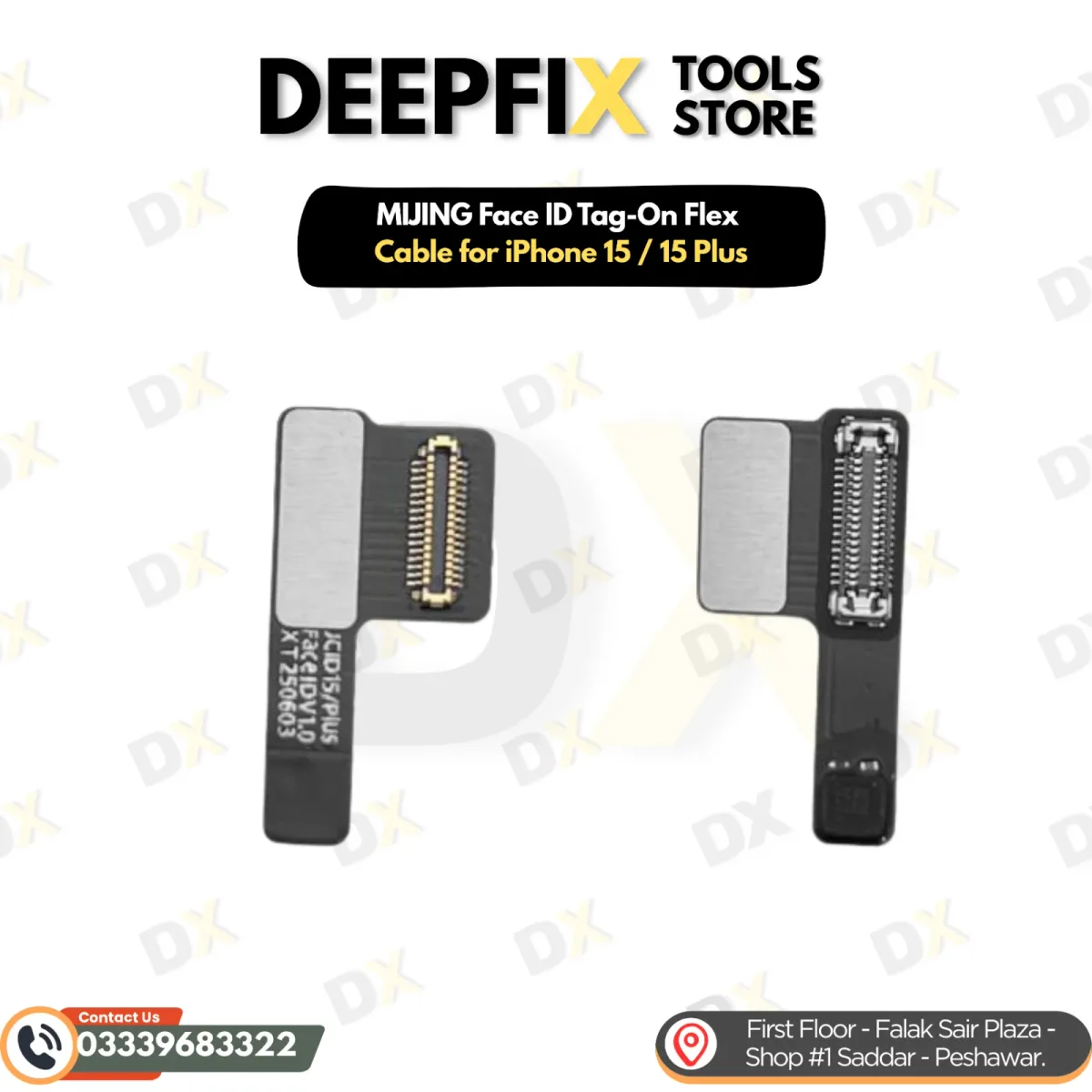
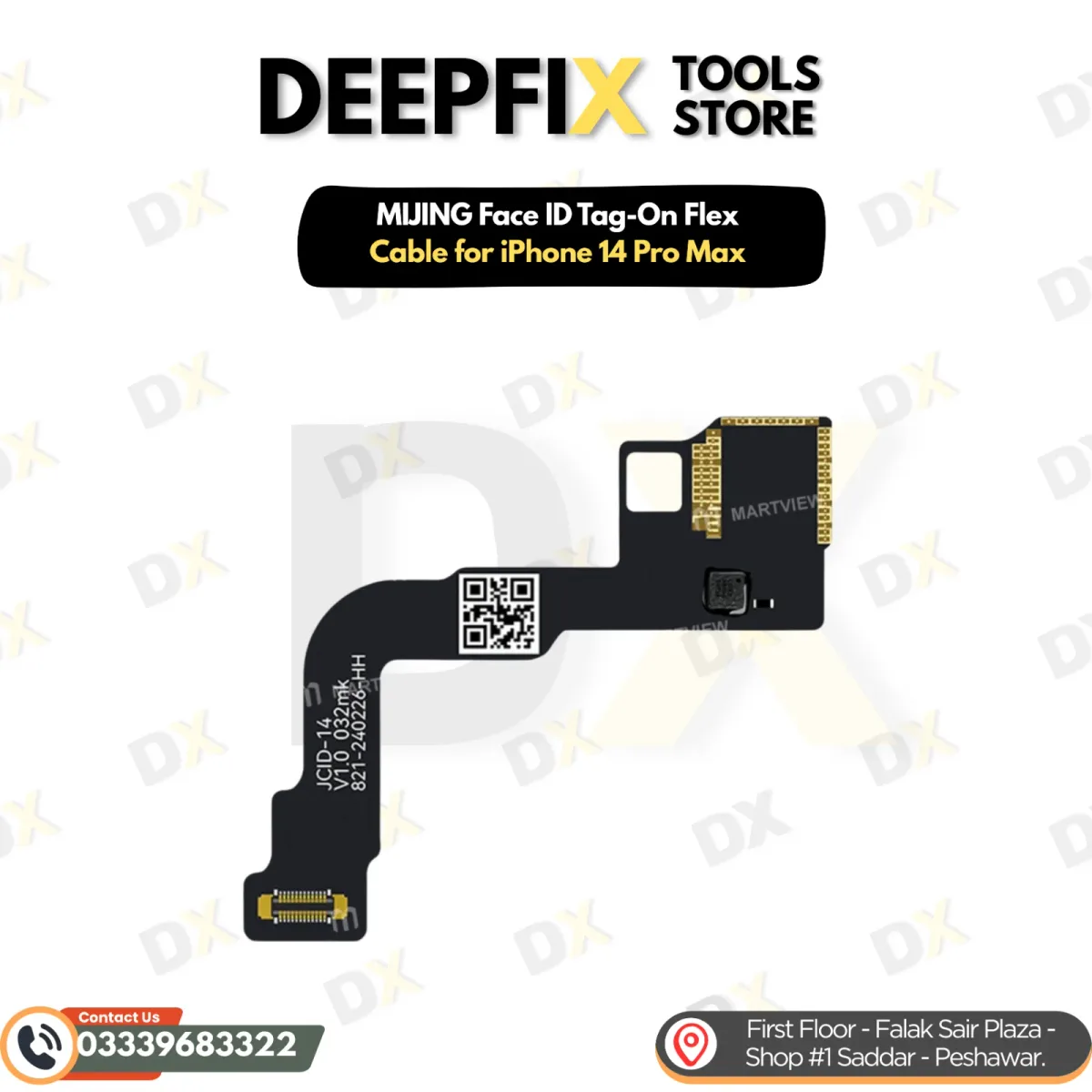
Face ID components are cryptographically paired to the device they shipped in, so replacing the assembly does not restore the feature — it removes it. A tag-on flex exists to solve exactly that problem: it repairs the damaged dot projector circuit while the original, factory-paired parts stay in the phone.
This one is cut for the iPhone 14 Plus and built on FPC material for stable signal transmission across the repaired path.
It is a microsoldering part rather than a plug-in replacement, and it is designed to be used alongside supported MIJING and Face ID programming tools.
Key features
- Repairs the dot projector circuit without replacing the Face ID assembly
- Preserves the factory-paired Face ID components, maintaining device security
- FPC construction for stable signal transmission
- Designed for use with supported MIJING and Face ID programming tools
What this is used for
- iPhone 14 Plus Face ID restoration
- Damaged dot projector circuit repair
- Face ID recovery without replacing paired components
Who it's for
Advanced microsoldering technicians and repair professionals. It is not intended for standard consumer installation.
Manufacturer description
Face ID components are cryptographically paired to the device they shipped in, so replacing the assembly does not restore the feature — it removes it. A tag-on flex exists to solve exactly that problem: it repairs the damaged dot projector circuit while the original, factory-paired parts stay in the phone. This one is cut for the iPhone 14 Plus and built on FPC material for stable signal transmission across the repaired path. It is a microsoldering part rather than a plug-in replacement, and it is designed to be used alongside supported MIJING and Face ID programming tools. • Repairs the dot projector circuit without replacing the Face ID assembly • Preserves the factory-paired Face ID components, maintaining device security • FPC construction for stable signal transmission • Designed for use with supported MIJING and Face ID programming tools Compatible with: iPhone 14 Plus.
Repair guides for this tool
You might also like
More from Tag On

Only 1 left
Only 4 left